Showing posts with label Raiders of the Lost Ark. Show all posts

Monday, October 24, 2016

The Hawai'i That Was: Rising Out of Depression on Kaua'i, and Sleeping Giants

There's a different part of Kaua'i, one that doesn't quite fit the image of dramatic high cliffs plunging into the sea. It's a lowland, a region of lesser hills and ridges that only rise a thousand feet or so, covered largely by rainforest. It's unusual because Kaua'i is often imagined as a single deeply eroded volcano that should have been evenly eroded from all directions. It turns out to be far more complicated than that. In fact, it can be thought of as two shield volcano complexes, one of which developed on top of another.
The head of the Sleeping Giant (and a tough short climb)
Nounou Ridge rises above Kapa'a and this lowland area called the Lihue Depression. The ridge is composed of the volcanic flows of the older shield, the Na Pali basalts, that date back to between four and five million years ago. Strangely, the basin below has younger rocks, the Koloa Volcanics, which date to between 2.65 million and 150,000 years ago. Why strange? If this basin were hollowed out by normal erosional processes, the rocks in the basin would be expected to be older.

The story involves the destruction of a portion of the original shield volcano that built up the island. Shields are huge volcanoes with gentle slopes, but they are inherently unstable. As has been noted in some previous posts in this series, huge avalanches sometimes cause portions of the volcano to slide into the sea. On Kaua'i, it appears that a large failure caused the eastern side of the island to subside several thousand feet. This formed the low depression, which was later covered by basalt flows of the Koloa Volcanics.

A decade ago, I climbed Nounou Ridge. A delightful trail climbs the flank of the mountain from a neighborhood above Kapa'a, offering some incredible views across the eastern part of the island.

Nounou Ridge is also called the "Sleeping Giant", and the ridge does indeed resemble a reclining big person. The story goes that a friendly giant help islanders with construction of heiaus and other structures. Celebrations followed, and the giant had too much to eat and grew drowsy and laid down for a nap. A very long nap (we've all been there, right?). I've seen stories that note that islanders started fires behind the ridge to highlight the profile in order to scare off potential invaders sailing in from offshore.

The mountain ridge in the distance in the picture above is Anahola Ridge, which like Nounou is composed of the older Na Pali basalts. If that steep pinnacle looks just a little bit familiar, think back to the memorable opening sequence of "Raiders of the Lost Ark".


The trail is mostly an easy climb to a picnic shelter on top of the "chest" of the giant. If you want to get to the high point, the "chin", you've got a bit of a climb ahead. The route (not exactly a trail anymore) is a scramble with a fair amount of exposure on both sides. I did the climb in ignorance (Read a field guide? Nah...), but I was glad to reach the summit. The view was outstanding.

The full extent of Anahola Ridge was visible off to the north, as well as the low country in between. The ridge is exposed to strong winds blowing off the ocean; note how the trees are bent over in the picture below.

The view to the south reveals Haupu Ridge, the memorable ridge that is viewed by most airplane passengers on the approach to Lihue Airport. The lowlands of the Lihue Depression fill the foreground, as well as the canyon of the Wailua River (Wailua Falls are hidden down there somewhere).

I would have included a shot of Waialeale, but as usual, the wettest mountain on Earth was shrouded in clouds.

"The Hawai'i That Was" is a series on the geology and anthropology of the Hawaiian Islands that explores the nature of the islands prior to colonization and the changes that have taken place since. If the rate of blog posting seems...um...slow lately, well yes, it's been a busy time. Have patience, and we'll finish our trip around the island in no time!

Monday, May 12, 2014

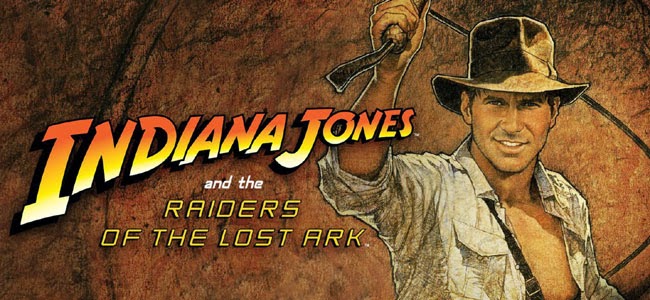
See the Raiders of the Lost Ark on the Big Screen (and get a treasure of your own) on May 15

This is a note of local interest to our readers in the Modesto region...

The Geology and Anthropology Clubs at Modesto Junior College invite you to an evening of thrills, chills, and death-defying action, and that's just the Silent Fossil and Mineral Auction! Beautiful examples of geodes, petrified wood, dinosaur bone, fossils, crystals and rare minerals will be offered for purchase. Proceeds will go towards scholarships for students in the field studies program in Geology and Anthropology at Modesto Junior College.

The auction will be followed by a special showing of Indiana Jones and the Raiders of the Lost Ark, the classic 1981 adventure produced by George Lucas and directed by Stephen Spielberg, starring Harrison Ford and Karen Allen. If you have never seen Raiders of the Lost Ark on the big screen, you've been missing out. The State Theatre is one of Modesto's treasures, and it is a marvelous venue for watching classic movies.

The students of the geology and anthropology programs at Modesto Junior College have been working hard to assist their fellow students to attend the Summer Field Studies trip to Canada and the Pacific Northwest this summer, and this is their biggest fundraising event of the year. Come out for a great time, and come home with a treasure of your own!

Date: Thursday, May 15 at 6:30 PM (film at 7:30 PM)

Location: State Theatre, 1307 J Street, Modesto 209-527-4697

Donation: $10 Pay at the door or get tickets in advance from Garry Hayes (575-6294) to guarantee a seat. Make checks out to Modesto Junior College Geology Club.

On behalf of the students of MJC, we thank you for your support!

Garry Hayes AKA Geotripper

Monday, June 13, 2011

The Rigors of the Routine Life II: On Other Hand, Your Brain Will Shrivel Up...

A couple of seemingly unrelated things caught my eye yesterday. First, it is the 30th anniversary of the release of my favorite film of all time: Indiana Jones and the Raiders of the Lost Ark. The second was an 1888 book on geology and geography (Eclectic Physical Geography by Russell Hinman) that I found in my bookshelves while looking for something else (Thanks Jim, for the gift!). The third thing that caught my eye was the flower display in my yard, which I wrote about in the previous post.

A routine life may be comfortable and predictable, but routine doesn't allow much room for growth and discovery. I have lived in one place for more than twenty years (very routine!), and there are places that I haunt with regularity (also routine), and I will sometimes sit in these restaurants or wander through the aisles of the stores and just listen to the ebb and flow of noise and actions of the staff. They never change; the players change, the owners change, but the essential activity never does. To what purpose? Usually to make money, to take home a paycheck. But through all the transactions, both economic and personal, little is learned, little is discovered, and no one gains anything more than a full stomach or a few bags of groceries (though these are very nice things to have). The workplace has a purpose, but for the most part that purpose has little to do with expanding the minds of those involved. There isn't any room, or desire, for human discovery. In the most cynical sense, we are supposed to stick to our routine, do our jobs, not cause trouble, and buy things.

One of the shocking lines in the movie "The Truman Show" was a teacher telling a young Truman "Oh, you're too late! There's nothing left to explore!" in response to his desire to travel the world like Magellan. In so many ways, society seems to be telling us all the same thing. When the budget axe falls, science and the arts in schools disappear in favor of more math and English multiple-choice standardized test-teaching courses. Libraries close, science divisions in state and national government disappear. Television and other media no longer have full time science editors, apart from weather readers. I might be overstating this, given the success of the Discovery Channel and others, but really, don't they go the mostly for spectacle? As a society, we are losing the sense of a need for discovery, and we are not providing outlets for it, especially among our children. There is nothing, we are told, in actions if not words, left to explore...(a tweet making the rounds notes that "if you watch NASA backwards, it's about a space agency that has no spaceflight capability, then does low-orbit flights, then lands on moon.").

In classes, we teach what others have discovered and our students sit passively, learning facts but not the excitement of the human journey. In a geologic sense, many of the places in my country and state have been explored, but...not by my students. And that is what all my disparate threads are all about: the need to get students into the field. No textbook, no blog (including this one), and no virtual field guide can ever replace the adventure of placing your hands on the rocks of a fresh lava flow or the ancient crust, or a dinosaur fossil in situ, or a crystal gleaming in a cavity one has just opened up with a chisel. A personal discovery is just as significant, just as important, as all the discoveries made by the Magellans, Newtons and Einsteins of the world, because in that personal life it will never be forgotten, and it will enrich that life in a way that rote learning cannot.

"Raiders" was a great Saturday movie serial, a white knuckle adventure that was never meant to be a career documentary on being an archaeologist or geologist. Yet, scattered here and there in the plot were tidbits of truth. The most important lesson was that no discovery comes without education and preparation. Discovery is hard work sometimes. Indiana Jones may have been a tomb raider of the worst kind, but he knew where to look because he was educated. Discoveries can't happen without planning and informed intuition.

The textbook in physical geography was a revelation simply because it revealed how little we as a species knew only a century ago. There were 70 known elements, there were only stars in the universe, not galaxies, the sun shone because of condensation of gases and impacts by meteorites, the Antarctic was possibly some islands, and no reason at all was known for the occurrence of earthquakes and volcanoes. There was gravity, but there was also a luminiferous ether, and no such thing as radiation. The racism in the final chapter is shocking. But, for all of its shortcomings (in hindsight), there was also an expectation that the unknown would be discovered in the future. I don't get that feeling so much from textbooks today. There are huge mysteries still to be solved, and our kids need to know this.

So, despite budget disasters and cuts in education, the chance for rain and snow (in June!), and high gas prices, we are going to hit the road for two weeks, and our students are going to discover...something. I will try to keep you posted whenever possible.

The pictures bookending today's post are the settings for two of the most famous scenes from the Indiana Jones movies. Who can identify the locations and the two scenes?