Showing posts with label Plotosaurus bennisoni. Show all posts

Tuesday, October 13, 2015

National Fossil Day is Tomorrow! Do You Know the Paleontological Heritage of Your Region?

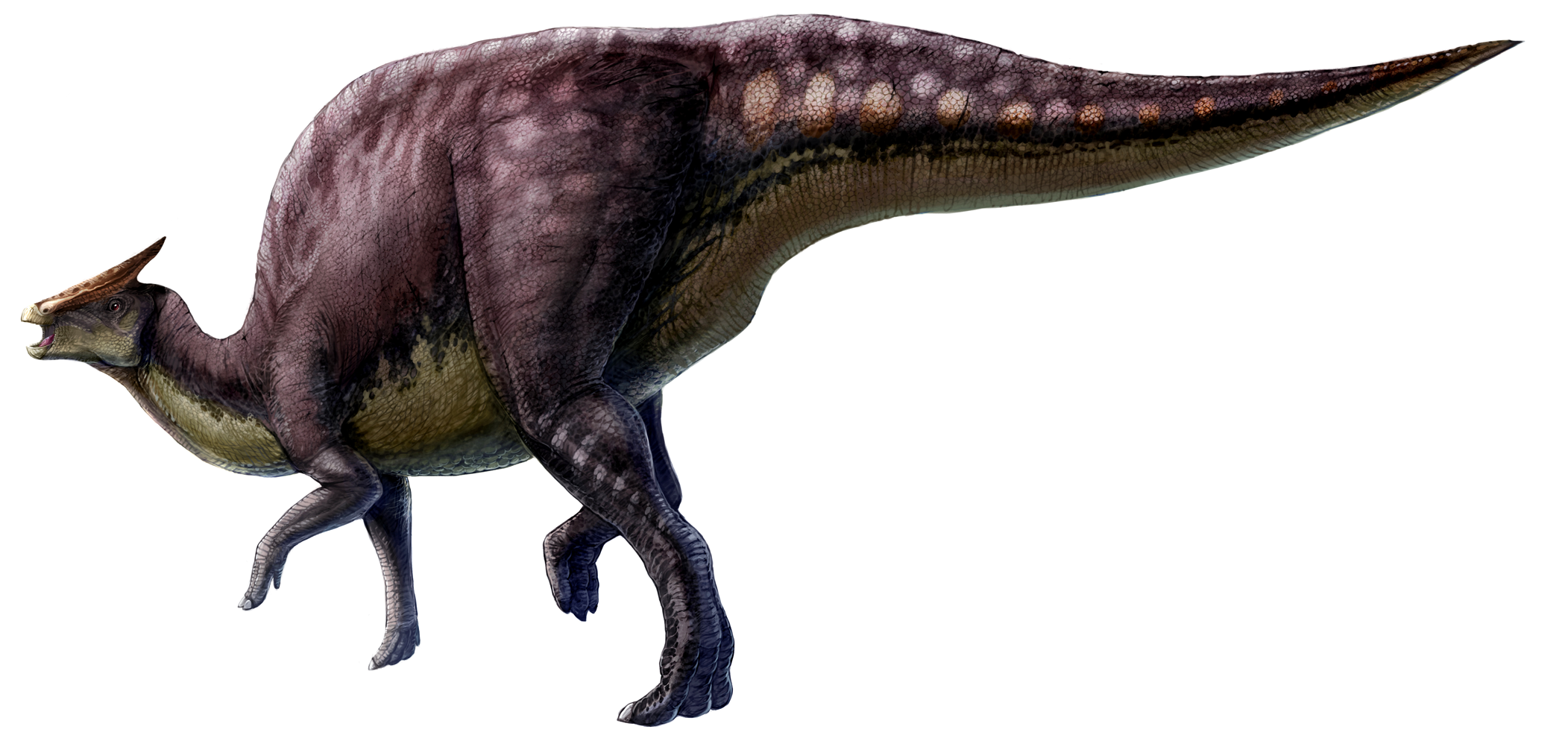
A hadrosaur skull similar to Saurolophus, the first dinosaur ever found in California
Tomorrow is National Fossil Day, which if anything, is of far greater interest than a holiday concerning an Italian explorer discovering a Caribbean island a few hundred years ago. One of the really exciting changes in our region is that our fossil heritage is being celebrated, pretty much for the first time. We finally have a museum with the room to adequately showcase the incredible paleontological history of the Great Valley of California. If you've read my blog at all, you'll know it's the Great Valley Museum at Modesto Junior College.
Two fossils here, but one of them isn't quite dead yet. The other is a Mosasaur
The Great Valley of California has a rich history of fossil discovery. Sediments were accumulating here in Jurassic and Cretaceous time, so dinosaurs and other reptiles have been discovered here, although not in concentrations like those of the continental interior. The first dinosaur ever discovered in California was found in our county. It was a Saurolophus, a variety of duck-billed dinosaur (the hadrosaurs). It was found by a teenager exploring Del Puerto Canyon in the 1930s.
Even more interesting, especially in light of a certain dinosaur movie last summer, are the Mosasaurs, large marine reptiles that were the terrors of the Cretaceous seas. One of them, Plotosaurus bennisoni, was discovered by the same kid who found the Saurolophus. It may have been 35 feet or longer in length.
Some fossils are more mundane, but they're exciting because I found them. Those would include these Jurassic wood fragments from the Sierra Nevada foothills. They were carried into the ocean by turbidity currents in the vicinity of the subduction zone that was once active here.
The most diverse and plentiful fossils are those of the creatures that grazed and hunted up and down our valley in Pleistocene time. The Fossil Discovery Center in the Madera area a few miles south of us has the best collection on display of these animals. The animals include the sometimes terrifying Short-faced Bear, Saber-tooth Cat, American Lion, and Dire Wolf. The grazers included a number of species of horse, camel and antelope, as well as mammoths and giant ground sloths. Many other smaller animals have been found in the quarry at Madera (which doubles as the sanitary waste disposal pit).
Few people in our county and region have had a venue in which they could learn about this fascinating fossil history, which is why the newly opened Great Valley Museum is such a wonderful opportunity. We have a full-sized skeleton of a Saber-tooth Cat, and a life-sized Mosasaur skull.
The newest exhibit highlights the research being done in Miocene sediments of the Mehrten Formation near Turlock Lake by the faculty and students of California State University, Stanislaus. Former MJC student Jake Biewer designed the current exhibit. The students are investigating some of the fossil sites where six-foot long "saber-toothed" salmon remains were found, along with tortoises the size of those found on the Galapagos Islands. Other exhibits are currently in the planning stages.
It's hard to describe how exciting it is to finally have a place to tell the story of the fascinating animals that lived here before us. The response from the children of our valley has been infectious. They love finding out that their home was once the home of that terrifying creature from the dinosaur movie, but also that they themselves could be the one who makes the next great discovery.

Have a great fossil day tomorrow! Learn something new about the place that you live!

Monday, May 18, 2015

Driving Through the Most Dangerous Plate Boundary in the World: Into the Realm of the Drowning Dinosaurs

The sediments of the Great Valley Group form the parallel ridges trending diagonally across the photograph.
California has a lot of potential for geological mayhem, with the San Andreas and many other faults, mountain-building, and volcanoes of many kinds. But it once was worse. During the Mesozoic era and the early part of the Cenozoic, the entire California coast was rimmed by a massive subduction zone. The huge earthquakes produced as the plate sank beneath the western edge of the continent would have produced horrific tsunamis. The sinking plate eventually produced bodies of molten rock that found their way to the surface, producing huge volcanoes, much like those found in the Andes Mountains today.

We've been making our way on a blog journey through this most dangerous plate boundary. The remains of the subduction zone have been lifted and exposed by erosion in the Coast Ranges. So far we have been observing the rocks of the accretionary wedge, the intensely deformed material that has been churned up within the trench of the subduction zone (see this post for an example). In our last post, we crossed through the oceanic crust of the Coast Range Ophiolite in Del Puerto Canyon in the Diablo Range. At the end of that post we crossed the Tesla-Ortigalita fault and entered into the exposures of the sediments of the Great Valley Group. We are now in the rain shadow of the Coast Ranges, and the slopes are barren of trees.
This large slump in the lower part of Del Puerto Canyon is the location of the discovery of the first dinosaur fossil ever found in California, in 1937.
The rocks of the Great Valley Group were deposited in a sea that lay between the trench and the western shoreline of the North American continent. The shallow ocean environment is called a forearc basin. The sediments consist of primarily of sandstone, siltstone, and shale that cascaded off the submerged edge of river deltas along the shoreline. The underwater landslides were called turbidity currents. The sediments pushed on the crust, and subsidence allowed vast thicknesses of sediment to accumulate. In the region around Del Puerto Canyon east of the Bay area, the layers total as much 25,000 feet. At the south end of the valley near Bakersfield, the rocks are around twice that.
All in all it doesn't sound like a good place to search for dinosaur fossils. The rocks are the right age, Cretaceous, but the dinosaurs were terrestrial creatures. They no doubt roamed the slopes of the the volcanoes and coastal plains of the continent, but few are known to have spent much time in the oceans. Finding a dinosaur fossil here seems about as likely as finding a cow or coyote skeleton at the bottom of the sea in the modern day. 
So, a hypothetical question: what if you did find a cow or a coyote skeleton on the sea floor? Could you explain it? It might take a moment, but one could imagine an intense flash flood along one of the rivers that flow off the Sierra Nevada and through the Great Valley, trapping and drowning a few cows or other creatures along the way. Their carcasses would have floated downstream, and eventually the bones could have sunk to the sea floor. I bring up this point because the sediments of the Great Valley Group have in fact yielded a few dinosaur fossils, and they probably did originate in a river flood.
Source: http://upload.wikimedia.org/wikipedia/commons/4/4b/Saurolophus_scalation.png
The first dinosaur ever found in the state was found in 1936 in our own county, Stanislaus, by a 17 year old boy named Al Bennison. He was searching for shell fossils in Del Puerto Canyon near the landslide seen in the photo above when he found some bone fragments on the hillside. They proved to be the remains of a duck-billed dinosaur (or hadrosaur), possibly a creature called a Saurolophus.
These were big creatures, as much as 30 or 35 feet long. They were plant-eaters, and were among the last of the dinosaurs, along with Triceratops and the tyrannosaurs. Bennison's discovery made news at the time, but few people in our county are aware of the awesome paleontological heritage of our region today. I'm hoping that will be changing soon as we prepare a display for the new Great Valley Museum of Natural History at Modesto Junior College.
Source: http://en.wikipedia.org/wiki/Saurolophus
But Bennison wasn't done yet. A year later in another canyon nearby he found the remains of a fearsome marine reptile called a mosasaur. Mosasaurs were probably the top predators of the Late Cretaceous seas, possibly even consuming sharks (yeah, that's a mosasaur you are seeing in the Jurassic World movie trailers, acting like a Sea World Orca). They are descended from ancient terrestrial lizards similar to the Komodo Dragon.
Bennison's mosasaur was a new species and now bears his name: Plotosaurus bennisoni. Like the hadrosaur, few people are aware that they once lived in this region. We have a four-foot long skull of a mosasaur on display in the museum, and a more extensive display is in the planning stages.
Another species of mosasaur, Plotosaurus Tuckeri, was found a few years later a bit further to the south. As can be seen in the diagram below, these creatures approached the size of whales, and would be a terror if they lived in today's oceans.

There have been many other discoveries of Mesozoic dinosaurs and other reptiles like plesiosaurs and ichthyosaurs. The best resource for learning about these fascinating creatures is the book Dinosaurs and Other Mesozoic Reptiles of California by Richard Hilton of Sierra College. Check it out!
From Dinosaurs and other Mesozoic Reptiles of California, by Richard Hilton
I reached the mouth of Del Puerto Canyon and was met with a disturbing sight that was emblematic of the conflict between humans and the natural landscape that we inhabit. More on that in the next post.


Thursday, December 11, 2014

The Holidays Come Early at the Great Valley Museum: A Big Toothy Predator Arrives

So, I got a call the other day from Receiving..."You've got a giant crate that's been delivered. Where do you want it? And I think "Huh? I don't remember having anything on order". And then in the fog of my brain (it's finals week; I'm more addled than normal), a vague memory emerges: we ordered something a year ago! And it finally arrived!

The crate was indeed huge. We had to remove close to two dozen screws, and like the father in the movie "A Christmas Story" ("fra-gee-lay"), we found a great deal of stuffing. But slowly it emerged: Jaws. Very big jaws.
The children of the Great Valley are impoverished and are poorly served by a state that sometimes has other priorities than education (can you spell "prisons" or "tax breaks for the rich"?). Few of the students have spent much time beyond the boundaries of their own towns, and have little knowledge of the natural world that lies beyond the housing developments and farms. The Great Valley Museum at Modesto Junior College has labored for years to teach our children about the rich ecosystem that once existed here (and still exists in small pockets here and there), but the exhibits languished in a modified 80 year old converted house. At long last this is changing, and we are on the verge of opening up the new museum on the bottom floor of our Science Community Center in just a month or two.

The museum will be an essential destination for learning about the natural history of the Great Valley and surrounding regions. Now, I'm all for this kind of thing (just take a short look at my other blog, for instance), but the unfortunately sad other fact is that practically no one in our county is familiar with the incredible paleontology of our region. Mention "digging for fossils" and most people think dinosaurs, and invariably dinosaurs in some other place. But the history of our planet is much more than just dinosaurs, and our region is richly blessed with an incredible fossil record of strange and wonderful creatures that have lived here through the ages. I've discussed them in the past, and will do so again, but today's arrival was a special part of our fossil heritage.

In the waning part of the dinosaur era (the Mesozoic), a creature related to the Komodo Dragon adapted to living in a marine environment, becoming one of the top predators of their time. Upwards of 30-40 feet long, the Mosasaurs were terrifying, with massive teeth, huge jaws, and presumably a huge appetite for anything that swam the seas. They have been found worldwide, and several have been found in the sediments of the Great Valley Group. An excellent specimen of a creature called Plotosaurus bennisoni was discovered in our county by a young man from Gustine in the 1930s. They were here! Another specimen, called Prognathodon rapax was discovered in Fresno County to the south of us.
This Mosasaur is on display at the Royal Tyrrell Museum in Drumheller, Alberta
No one sells specimens or replicas of those exact species, so we purchased a related species that will get the point across. It's a skull of a Prognathodon stadtmani that was discovered in the Durango, Colorado region. It is a big skull! I can't imagine a child upon seeing this skull not wanting to get out and explore and maybe find one on their own. And knowing that it could actually happen because one like it was found in their own county. The dinosaurs were okay, they might think, but we had really interesting creatures that lived right here!
This is an exciting time for the children of our valley, even if they don't know it yet. They are about to discover a world, their world, that includes massive and sometimes ferocious creatures like the Mosasaurs, Ichthyosaurs, Plesiosaurs, Saber-tooth Cats, Short-faced Bears, Dire Wolves, American Lions, Megalodon sharks and many others.

Wednesday, November 27, 2013

What Creature of the Great Valley Could Have Snacked on Velociraptors? This one...

I apologize for the quality of the photographs today; they are from my phone, which is all I had when our latest display specimen arrived in our department. It's an exciting addition to the collection. We have been making a concerted effort over the last decade to raise the quality of science education in our impoverished community, an effort supported by our community with the passage of a bond act that brought about the construction of the Science Community Center at Modesto Junior College. The facility is wonderful, with a new planetarium and a fully operational observatory, as well as a vastly expanded Great Valley Museum.

My goal during this decade long project has been to increase the recognition that our county has a rich history of discovery in the field of paleontology. The first dinosaur ever found in California was discovered in our county in 1936. It was a hadrosaur, a duck-billed dinosaur, and we are still awaiting the arrival of a specimen of that creature in our department.

But what arrived today was one of the most fascinating creatures to ever come out of the sand and silt of the Great Valley Group: a mosasaur. The mosasaurs were some of the most fearsome sea creatures of the Mesozoic era. They were not dinosaurs, but instead were more closely related to large lizards. The middle skull is our recently acquired short-faced bear (Arctodus simus), one of the largest carnivorous mammals ever to exist, while the dinky little skull on the right is an accurately scaled velociraptor!
Mosasaurs arrived late on the scene, during the mid-Cretaceous Period, possibly occupying the environmental niche of the recently extinct Ichthyosaurs which had dominated the Mesozoic seas since Triassic time. Mosasaurs resemble varanid lizards (like the Komodo Dragon) and the various species ranged in size from about 10 feet (3 meters) to as much as 57 feet (17.5 meters).

The young man who discovered the first dinosaur in California, Al Bennison, also discovered the first mosasaur in our state. As it was an entirely new species, it was named Plotosaurus bennisoni. His specimen was probably about 30 feet long. Not long after an even longer species was discovered, Plotosaurus tuckeri, which measured over 40 feet in length.

I wanted a display specimen that could communicate to the young visitors in our museum and Science Community Center the excitement of the paleontological heritage of the region they live in, and having a four foot long skull of a mosasaur will go a long way towards achieving that goal. It arrived today and I was thrilled to see it. Just the same it was a terrifying creature. If it had you in its jaws, you weren't going anywhere. If you look in the picture below, you can see a second set of teeth in the back of the jaw. It was literally like something from the Aliens movies.

The specimen, from Taylor-Made Fossils of Missouri, is not a Plotosaurus, but will suffice to show what the Mosasaurs were like. The definitive source of information about the California mosasaurs is the book Dinosaurs and other Mesozoic Reptiles of California by Richard Hilton (who taught at MJC for a time; he is currently at Sierra College). The illustration below is a scan of his idea of the appearance of the Plotosaurus bennisoni.
From Dinosaurs and other Mesozoic Reptiles of California, by Richard Hilton

If you ever are passing through the Modesto area, be sure to stop in on the west campus of Modesto Junior College and wander through the Science Community Center. Even though the museum is not slated to open for a few more months, there are many other displays throughout the complex, including our new seismometer, and very soon, a mosasaur skull on the third floor in the geology area!