Showing posts with label Great Basin. Show all posts

Saturday, December 28, 2024

About That Bucket List...What Would You Do To See These Places?

Horseshoe Bend on the Colorado River
So...about that bucket list of yours. 

Surely you have one. If you don't, what's keeping you from making one? Here's a version I promoted a few years back (I've made it to around 70% of them so far and feel exceedingly lucky to have been able to do so).

In any case, how many of the following are (or should be) on your personal list? Possibly Grand Canyon, Zion, Bryce Canyon, Arches, Petrified Forest, Capitol Reef, Yosemite, Great Basin, or Canyonlands National Parks? What about Ancestral Pueblo cliff dwellings at places like Bear's Ears or Grand Staircase-Escalante? Finding ancient petroglyphs along the Colorado River? Or searching for dinosaur bones? How would your life be changed if you could somehow do all these things...in one trip? It's possible!
Grand Canyon National Park
There is no place on this planet like the Colorado Plateau. It's hard to find anyplace else on Earth where the crust remained relatively stable for upwards of a billion years, accumulating several miles of horizontal sediments, only to be lifted up rapidly in the last few million. The Colorado River and her tributaries then stripped away much of the sedimentary cover, and cut deep into the underlying metamorphic rocks. Those metamorphic rocks record a violent geologic history of colliding landmasses and mountain-building. The resulting landscape is one of the most beautiful regions imaginable.
Angels Landing Trail in Zion National Park, Utah
The plateau country is a training ground for geologists and earth scientists, and has been since the days of John Wesley Powell and Joseph Ives, who were the first to lead research parties into the region (they didn't "discover" the plateau, of course; Native Americans have known the region for thousands of years). If you are curious about learning geology in this incredible region, you might consider joining us as a student (of any age) on our geology field studies course Geology 191: Geology of the Colorado Plateau, offered under the auspices of Modesto Junior College in Modesto, California. The course is designed to fulfil the curiosity and build the skills of lay geologists and archaeologists as well.
Mesa Arch in Canyonlands National Park
Our field course will be a grand loop through the plateau country, with investigations of the Mojave National Scenic Preserve, Grand Canyon, Zion, Bryce Canyon, Arches, Canyonlands, Petrified Forest, Capitol Reef, Great Basin and Yosemite National Parks, as well as many monuments, including Bear's Ears, Grand Staircase-Escalante, Natural Bridges, Navajo, and Hovenweep. It will be an unforgettable two week trip from June 3-17, 2025, beginning and ending in Modesto, California. Further information will be found soon here and at my school website. 
Petroglyphs on the plateau
It's not a comfortable trip...we travel in school vans (which of course are known for their luxuriousness!), we camp every night, and the days can be hot, windy, cold, or stormy, and we are out in the middle of anything that happens. But we are staying in beautiful places each night, and there are even showers and laundry available every third day or so! Extensive hiking is not required, but there will be many chances to explore the trails in each park and monument.
Petrified Forest National Park
Geology 191 is a 3-semester-unit course. By end of the course, you will be able to see the landscape the way geologists do: by identifying rocks, minerals and fossils, and interpreting the geological history of an area by working out the sequence of events as exposed in outcrops. If you are a science teacher, you will come home with a collection of photographs that illustrate most of the important principles of geology, and a selection of rocks, minerals and fossils that will make a great classroom teaching tool (legally collected, of course; there are many localities outside of protected parks from which to collect samples). You will also gain some mastery of the archaeology and culture of the plateau region, the home of the Ancestral Puebloans, the Fremont people, the Navajo, the Utes, and others.
Canyonlands National Park, Utah

The cost of the trip (still to be officially determined) will be $850 plus the cost of tuition (Currently $46 per unit for California residents, and around $225 per unit for out-of-state residents). The cost includes transportation, food, camp fees, and entrance fees. Participants would want to bring a few dollars along for showers, laundry, and souvenirs.  The food is tasty and plentiful (everyone helps cook and clean!), and the school vans...are vans.
House-on-Fire Ruin, Bear's Ears National Monument
For those of you who live in the Modesto region, we are having an organizational meeting in April which will also be available as a Zoom session. Details will be provided later on.

If you are not in the area, we will be glad to arrange for transportation from nearby airports and train stations (we actually have an Amtrak station in town). Enrollment can be completed online once you are registered with the college (http://www.mjc.edu). Please contact me with any questions you may have.
Bryce Canyon National Park
Hope to see you out there, back of beyond!

Friday, February 21, 2020

The Islands of Interior California: A New Geotripper Series


I've always been fascinated by islands. I visit the Hawaiian Islands every chance I get, and I am literally haunted by the vast expanses of open ocean that separate the islands from any other landmasses. It's an odd combination of loneliness and wonder. It's not something you ever feel when you are staying in Waikiki hotels and sunning yourself on a crowded beach. The sense of isolation comes when you spend time in the rainforests, the alpine deserts, and the barren volcano slopes. When you read about and experience the incredible biological isolation, it becomes an incredible story of survival and adaptation that has produced hundreds of unique endemic species found nowhere else in the world.

Which leads to a question: what does that have to do with a bunch of pictures of localities in the California desert?

I was in Death Valley National Park for much of the past week, and while I was teaching a field course, I also had a few moments of observation and reflection about life in the desert. I was watching for bird species in particular, and I was struck by an odd contradiction: Death Valley (Furnace Creek specifically) has more bird species (339) than my county in California's Great Valley (315). It doesn't seem possible, since conditions are far more benign at home, and in fact the Great Valley can support vastly greater numbers of birds. But Death Valley has a way of forcing more species together in one place where they can be seen and recorded...it is a system of biological islands. The islands are made of water, and the intervening space is largely barren land.
The concept of biologic islands in a landscape is not a new concept at all, so I am not introducing any kind of new idea here. It's just that I sensed the concept more than usual during the recent trip. So in the next few posts I want to describe some of the unique and different "islands" that exist in the California desert, and the geological conditions that caused them. Some of these we explored last week, but as I considered the idea of a series, I thought of a few unique spots I've visited in earlier journeys, so I will include a few of them as well.
Coming up in the next post: the spot that made me think of islands in the first place...


Part 1: The Littlest Islands of All
Part 2: The Pygmy Mammoths and the Doomed Sky Islands
Part 3: There's a Reason Why I Don't Hug Ducks

Wednesday, April 4, 2018

The Most Extraordinary Landscape on Planet Earth: Geotripping on the Colorado Plateau, June 2-17, 2018

North Rim of Grand Canyon National Park

There is no place on this planet like the Colorado Plateau. It's hard to find anyplace else on Earth where the crust remained relatively stable for upwards of a billion years, accumulating several miles of horizontal sediments, only to be lifted up rapidly in the last few million. The Colorado River and her tributaries then stripped away much of the sedimentary cover, and cut deep into the underlying metamorphic rocks. Those metamorphic rocks record a violent geologic history of colliding landmasses and mountain-building. The resulting landscape is one of the most beautiful places imaginable.
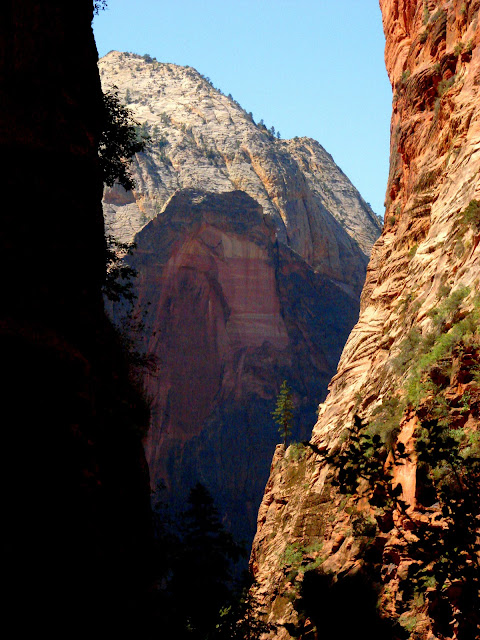
Angels Landing Trail in Zion National Park, Utah
The plateau country is a training ground for geologists and earth scientists, and has been since the days of John Wesley Powell and Joseph Ives, who were the first to lead research parties into the region (they didn't "discover" the plateau, of course; Native Americans have known the region for thousands of years). If you are curious about learning geology in this incredible region, you might consider joining us as a student (of any age) on our geology field studies course Geology 191, offered under the auspices of Modesto Junior College in Modesto, California. The course is designed to fulfil the curiosity of lay geologists and archaeologists, but also to build the skills of geology and archaeologists as well.
Goosenecks of the San Juan River, Utah
Our field course will be a grand loop through the plateau country, with investigations of the Mojave National Scenic Preserve, Grand Canyon, Zion, Bryce Canyon, Arches, Canyonlands, Capitol Reef, Black Canyon of the Gunnison, Mesa Verde and Great Basin National Parks, as well as many monuments, including Bear's Ears, Grand Staircase-Escalante, Natural Bridges, Navajo, Hovenweep, and Colorado National Monuments. It will be an unforgettable two week trip from June 2-17, 2018, beginning and ending in Modesto, California. Information can be found soon at my school website at http://hayesg.faculty.mjc.edu/Geology_191_Colorado_Plateau.html .
Black Canyon of the Gunnison National Park in Colorado
It's not a comfortable trip...we travel in school vans (which of course are known for their luxuriousness!), we camp every night, and the days can be hot, windy, cold, or stormy, and we are out in the middle of anything that happens. But we are staying in beautiful places each night, and there are even showers and laundry available every third day or so! Extensive hiking is not required, but there will be many chances to explore the trails in each park and monument.
Double Arch in Arches National Park in Utah
Geology 191 is a 3 semester unit course which will be taught as a dyad with Anthropology 191 (also 3 units). By end of the course, you will be able to see the landscape the way geologists do: by identifying rocks, minerals and fossils, and interpreting the geological history of an area by working out the sequence of events as exposed in outcrops. If you are a science teacher, you will come home with a collection of photographs that illustrate most of the important principles of geology, and a selection of rocks, minerals and fossils that will make a great classroom teaching tool (legally collected, of course; there are many localities outside of protected parks from which to collect samples). The dual nature of the course means that you will also have a mastery of the archaeology of the plateau region, the home of the Ancestral Puebloans, the Fremont people, the Navajo, the Utes, and others.
Canyonlands National Park, Utah
The cost of the trip will be $850.00 plus the cost of tuition (Currently $46 per unit for California residents, and $222 per unit for out-of-state residents). The cost includes transportation, food, camp fees, and entrance fees. Participants would want to bring a few dollars along for showers, laundry, and souvenirs.  The food is tasty and plentiful (everyone helps cook and clean!), and the school vans...are vans.

For those of you who live in the Modesto region, we are having an organizational meeting on Monday, April 16 in Room 326 of the Science Community Center on the west campus of Modesto Junior College from 6:30-7:30 PM. If you are unable to make it to the meeting, you can contact me for details and handouts.

If you are not in the area, we will be glad to arrange for transportation from nearby airports and train stations (we actually have an Amtrak station in town). Enrollment can be completed online once you are registered with the college (http://www.mjc.edu). Please contact me through the class website if you have any questions.
Bryce Canyon National Park
Hope to see you out there, back of beyond!

Monday, July 31, 2017

But Wait! THIS Summer isn't even over yet! Explore the Colorado Plateau, June 2-17, 2018 (Put it on your calendar now!)

North Rim of Grand Canyon National Park (yes, Gaelyn, we'll be on the North Rim, hope to see you there!)
"Wait!", you are saying, "it's still the summer of 2017! Why are you talking about the summer of 2018?" It's a fair question, and the answer is predicated on an unfortunate truth: our parks are too small and too crowded. If I hope to mount a field studies expedition NEXT summer, I have to start making the reservations right now. That's what I was up to today, and it occurred to me that it's never too early to put something on your calendar. We'd love to have you join us next year, on June 2-17, 2018.

There is no place on this planet like the Colorado Plateau. It's hard to find anyplace else on Earth where the crust remained relatively stable for upwards of a billion years, accumulating several miles of horizontal sediments, only to be lifted up rapidly in the last few million. The Colorado River and her tributaries then stripped away much of the sedimentary cover, and cut deep into the underlying metamorphic rocks, which record a violent geologic history of colliding landmasses and mountain-building. The resulting landscape is one of the most beautiful places imaginable.
Angels Landing Trail in Zion National Park, Utah
The plateau country is a training ground for geologists and earth scientists, and has been since the days of John Wesley Powell and Joseph Ives, who were the first to lead research parties into the region (they didn't "discover" the plateau, of course; Native Americans have known the region for thousands of years). If you are curious about learning geology in this incredible region, you might consider joining us as a student (of any age) on our geology field studies course Geology 191, offered under the auspices of Modesto Junior College in Modesto, California. The course is designed to fulfil the curiosity of lay geologists and archaeologists, but also to build the skills of geology and anthropology majors as well.
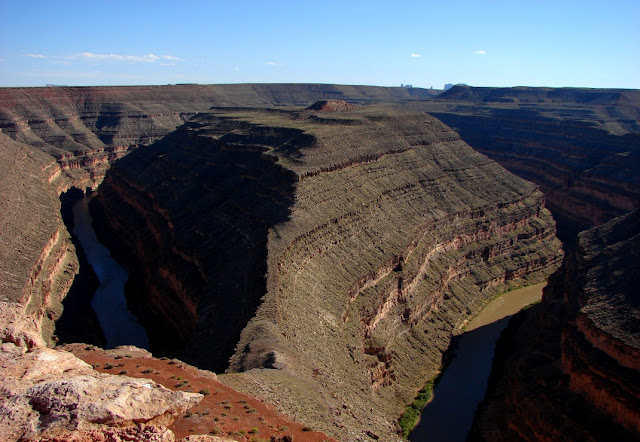
Goosenecks of the San Juan River, Utah
Our field course will be a grand loop through the plateau country, with investigations of the Mojave National Scenic Preserve, Grand Canyon, Zion, Bryce, Arches, Canyonlands, Capitol Reef, Black Canyon of the Gunnison, Mesa Verde and Great Basin National Parks, as well as many monuments, including the new Bear's Ears, Grand Staircase-Escalante, Natural Bridges, Navajo, Hovenweep, Colorado, and state parks like Goblin Valley and Berlin-Ichthyosaur. It will be an unforgettable two week trip from June 2-17, 2018, beginning and ending in Modesto, California. Information can be found soon at my school website at  http://hayesg.faculty.mjc.edu/Geology_174_Colorado_Plateau.html.
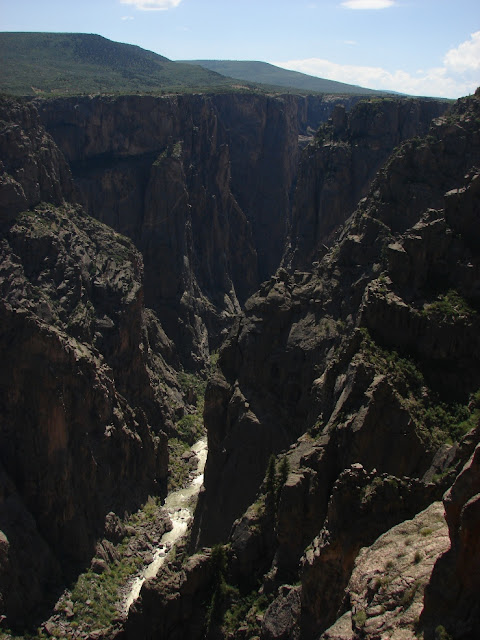
Black Canyon of the Gunnison National Park in Colorado
It's not a comfortable trip...we travel in school vans (which of course are known for their luxuriousness!), we camp every night, and the days can be hot, windy, cold, stormy, and we are out in the middle of anything that happens. But we are staying in beautiful places each night, and there are even showers and laundry available every third day or so! Extensive hiking is not required, but there will be many chances to explore the parks and monuments that we are visiting.
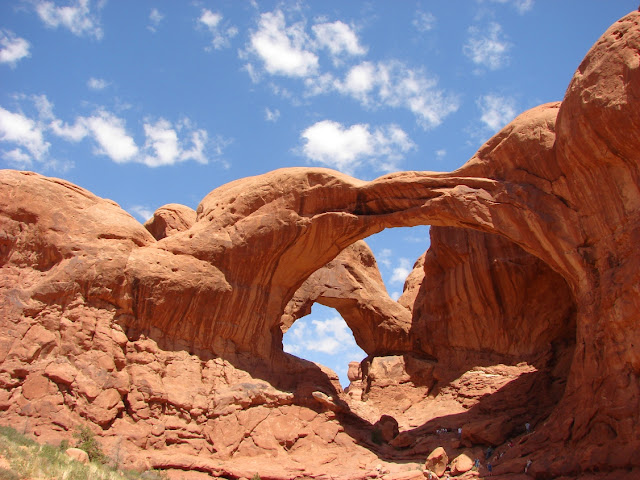
Double Arch in Arches National Park in Utah
Geology 191 is a 3 semester unit course which will be taught as a dyad with Anthropology 191 (also 3 units). By end of the course, you will be able to see the landscape the way geologists do: by identifying rocks, minerals and fossils, and interpreting the geological history of an area by working out the sequence of events as exposed in outcrops. If you are a science teacher, you will come home with a collection of photographs that illustrate most of the important principles of geology, and a selection of rocks, minerals and fossils that will make a great classroom teaching tool (legally collected, of course; there are many localities outside of protected parks from which to collect samples). The dual nature of the course means that you will also have a mastery of the archaeology of the plateau region, the home of the Ancestral Puebloans, the Fremont people, the Navajo, the Utes, and others.
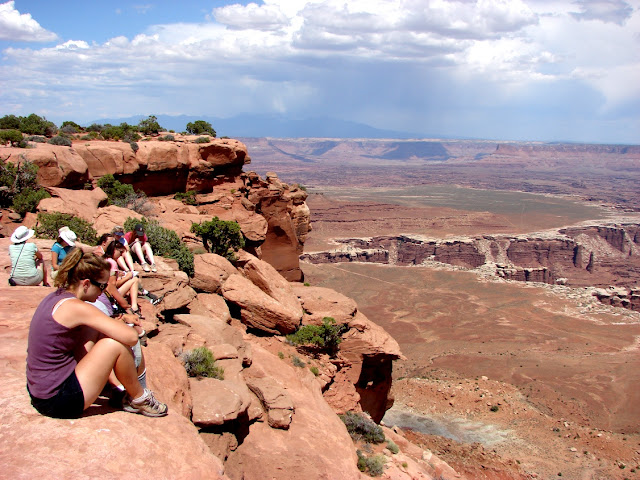
Canyonlands National Park, Utah
The cost of the trip will be about $850.00 plus the cost of tuition (Currently $46 per unit for California residents, and $222 per unit for out-of-state residents). The cost includes transportation, food, camp fees, and entrance fees. Participants would want to bring a few dollars along for showers, laundry, and souvenirs.  The food is tasty and plentiful (everyone helps cook and clean!), and the school vans...are vans.

For those of you who live in the Modesto region, we are having an organizational meeting in April, towards the end of the spring semester.

If you are not in the area, we will be glad to arrange for transportation from nearby airports and train stations (we actually have an Amtrak station in town). Enrollment can be completed online once you are registered with the college (http://www.mjc.edu/index.html). Please contact me through the class website if you have any questions.
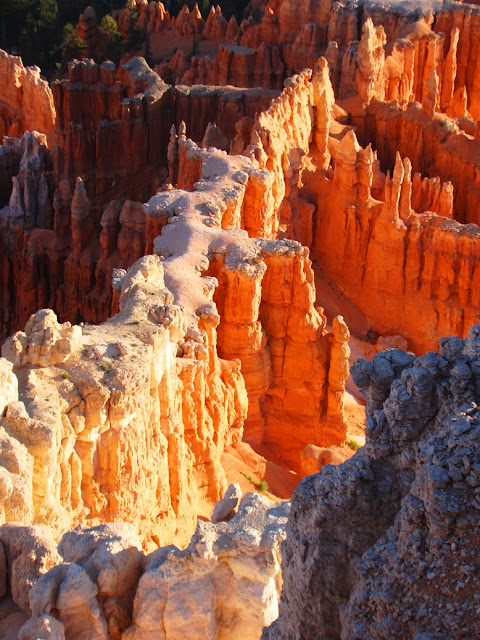
Bryce Canyon National Park
Hope to see you out there, back of beyond!

Wednesday, May 18, 2011

See Glacier Before the Glaciers are Gone; See Yellowstone Before the Supervolcano Blows: Take a Geology Field Course This Summer

There was a time when the our national parks seemed like unchangeable icons and symbols. They were protected from development, they were reservoirs of intact ecosystems and clean water and air, and a family might have told stories of camping in the olden days of the 30's and 40's, and until recently one could reasonably expect to have a similar experience in the current era. Times are changing, however. Glaciers are disappearing from Glacier National Park, forests and wildlife are transforming in parks like Yellowstone and Yosemite as the climate warms, and some parks are becoming isolated islands in seas of urban development. Views in parks like Grand Canyon, Bryce Canyon and Sequoia are increasingly obscured by air pollution. Our orphaned parks, the state parks, are being being closed for lack of funding. Others face privatization. It's a shame that the best idea our country ever had is being in some ways abandoned. I would love to think that we are coming up with better ways of caring for our national and state treasures, but I am not optimistic. When budget cuts come, the parks get cut first.
I guess this is an odd way to extend an invitation! But if you live in the Modesto region (or are willing to make some major travel arrangements), we would like to invite you to travel with us on an exploration of some of our country's most precious places: the Pacific Northwest and the Northern Rocky Mountains. I'm working with our anthropology professor to offer a dyad class on the archaeology and geology of nine national parks and monuments (Lava Beds, Crater Lake, Newberry Crater, Mt. Rainier, Glacier, Yellowstone, Grand Tetons, Great Basin, Yosemite) as well as a multitude of state parks and other sites. And you can get three units of semester credit doing something interesting!
That's not to say there will be no work...you have to learn stuff, and demonstrate it too us! And it is a camping excursion, with all the possibilities of rain, snow, sun, wind and critters. On the other hand, there will be plenty of opportunities to hike, to see starlight skies and wonderful sunsets, and to have a multitude of unforgettable and unique experiences. If you are interested, see the press release below for more information. We are having an informational meeting on Monday if you live nearby. We can provide info by e-mail if you can't come to the meeting.

MJC offers new Geology and Archaeology summer field studies class

(Modesto, CA) — Modesto Junior College is offering a unique summer field studies course entitled Geology and Archaeology of the Pacific Northwest and Northern Rocky Mountains held June 15 to June 30, 2011. Anyone interested in enrolling in this special learning opportunity is invited to attend the orientation meeting on Monday, May 23 at 7 p.m. in Science 132 on East Campus.

The course will provide an exploration of Yellowstone, Crater Lake, Grand Tetons and Glacier National Parks, and Mount St. Helens and Lava Beds National Monuments. Participants will also have the chance to visit and discover some less familiar spots that provide evidence of the geological and human history of the region, including Great Basin National Park, Berlin-Ichthyosaur State Park, Fossil Butte National Monument, and Newberry Crater.

The new joint class is being taught by Professor of Anthropology Susan Kerr and Professor of Geology Garry Hayes and students will earn 3 semester units in either Geology 174 or Anthropology 174. A background is not required in either of these subjects. Basic principles will be developed prior to and during the course, and participation will benefit anyone interested in a career in teaching, park management and rangering, or science.

The group will camp in the parks and monuments and the $650 class fee includes all transportation, camping fees, park admission fees, and food. A registration fee of $26 per unit is additional, as are other applicable fees for those not already enrolled as an MJC student. Anyone wishing to register for the class who is not already enrolled as an MJC student must submit an application online at www.mjc.edu.

For additional information email Susan Kerr at kerrs@mjc.edu or Garry Hayes hayesg@mjc.edu or visit http://virtual.yosemite.cc.ca.us/ghayes/serv06.htm for a complete itinerary.