Showing posts with label Geology 191. Show all posts

Saturday, December 28, 2024

About That Bucket List...What Would You Do To See These Places?

Horseshoe Bend on the Colorado River
So...about that bucket list of yours. 

Surely you have one. If you don't, what's keeping you from making one? Here's a version I promoted a few years back (I've made it to around 70% of them so far and feel exceedingly lucky to have been able to do so).

In any case, how many of the following are (or should be) on your personal list? Possibly Grand Canyon, Zion, Bryce Canyon, Arches, Petrified Forest, Capitol Reef, Yosemite, Great Basin, or Canyonlands National Parks? What about Ancestral Pueblo cliff dwellings at places like Bear's Ears or Grand Staircase-Escalante? Finding ancient petroglyphs along the Colorado River? Or searching for dinosaur bones? How would your life be changed if you could somehow do all these things...in one trip? It's possible!
Grand Canyon National Park
There is no place on this planet like the Colorado Plateau. It's hard to find anyplace else on Earth where the crust remained relatively stable for upwards of a billion years, accumulating several miles of horizontal sediments, only to be lifted up rapidly in the last few million. The Colorado River and her tributaries then stripped away much of the sedimentary cover, and cut deep into the underlying metamorphic rocks. Those metamorphic rocks record a violent geologic history of colliding landmasses and mountain-building. The resulting landscape is one of the most beautiful regions imaginable.
Angels Landing Trail in Zion National Park, Utah
The plateau country is a training ground for geologists and earth scientists, and has been since the days of John Wesley Powell and Joseph Ives, who were the first to lead research parties into the region (they didn't "discover" the plateau, of course; Native Americans have known the region for thousands of years). If you are curious about learning geology in this incredible region, you might consider joining us as a student (of any age) on our geology field studies course Geology 191: Geology of the Colorado Plateau, offered under the auspices of Modesto Junior College in Modesto, California. The course is designed to fulfil the curiosity and build the skills of lay geologists and archaeologists as well.
Mesa Arch in Canyonlands National Park
Our field course will be a grand loop through the plateau country, with investigations of the Mojave National Scenic Preserve, Grand Canyon, Zion, Bryce Canyon, Arches, Canyonlands, Petrified Forest, Capitol Reef, Great Basin and Yosemite National Parks, as well as many monuments, including Bear's Ears, Grand Staircase-Escalante, Natural Bridges, Navajo, and Hovenweep. It will be an unforgettable two week trip from June 3-17, 2025, beginning and ending in Modesto, California. Further information will be found soon here and at my school website. 
Petroglyphs on the plateau
It's not a comfortable trip...we travel in school vans (which of course are known for their luxuriousness!), we camp every night, and the days can be hot, windy, cold, or stormy, and we are out in the middle of anything that happens. But we are staying in beautiful places each night, and there are even showers and laundry available every third day or so! Extensive hiking is not required, but there will be many chances to explore the trails in each park and monument.
Petrified Forest National Park
Geology 191 is a 3-semester-unit course. By end of the course, you will be able to see the landscape the way geologists do: by identifying rocks, minerals and fossils, and interpreting the geological history of an area by working out the sequence of events as exposed in outcrops. If you are a science teacher, you will come home with a collection of photographs that illustrate most of the important principles of geology, and a selection of rocks, minerals and fossils that will make a great classroom teaching tool (legally collected, of course; there are many localities outside of protected parks from which to collect samples). You will also gain some mastery of the archaeology and culture of the plateau region, the home of the Ancestral Puebloans, the Fremont people, the Navajo, the Utes, and others.
Canyonlands National Park, Utah

The cost of the trip (still to be officially determined) will be $850 plus the cost of tuition (Currently $46 per unit for California residents, and around $225 per unit for out-of-state residents). The cost includes transportation, food, camp fees, and entrance fees. Participants would want to bring a few dollars along for showers, laundry, and souvenirs.  The food is tasty and plentiful (everyone helps cook and clean!), and the school vans...are vans.
House-on-Fire Ruin, Bear's Ears National Monument
For those of you who live in the Modesto region, we are having an organizational meeting in April which will also be available as a Zoom session. Details will be provided later on.

If you are not in the area, we will be glad to arrange for transportation from nearby airports and train stations (we actually have an Amtrak station in town). Enrollment can be completed online once you are registered with the college (http://www.mjc.edu). Please contact me with any questions you may have.
Bryce Canyon National Park
Hope to see you out there, back of beyond!

Friday, April 6, 2018

An Incredible Spot in the Mojave Desert, the Hole in the Wall. You could see it for yourself this summer

Summer is coming soon. If you are casting about wondering what to do, how about the adventure of a lifetime? Our department is offering a dyad class, Geology 191/Anthropology 191, the Geology and Anthropology of the Colorado Plateau, and it is an incredible chance to check out some marvelous geology along our southwestern tier of states: California, Arizona, Colorado, Utah, and Nevada. I want to give you a bit of a preview of the kinds of places we will be visiting...
The Mojave National Preserve is one of our nation's newest parks (established in 1994). It was carved out from Bureau of Land Management lands in the eastern Mojave Desert, preserving one of the most awesome sand dune complexes in the country, the Kelso Dunes, a barren landscape of geologically recent volcanic cinder cones, one of the largest Joshua Tree forests in existence, and some of the highest mountain ranges in the Mojave Desert, with rocks as old as 1.7 billion years old, as ancient as those in the bottom of the Grand Canyon. The preserve also encompasses a California State Recreation Area, the Providence Mountains, and Mitchell Caverns, a unique limestone cave system. The caverns were closed during the recession, and then severely vandalized, but they have finally been reopened for visitation (see this Facebook page for updates).
One of the most interesting corners of the park is called Hole in the Wall, along with Banshee Canyon. We will be staying at the nearby campground our first night on the road on June 2. It is a wonderfully isolated spot, 25 miles off the main highway, and even farther from developments of any kind. It has some of the darkest night skies I've ever seen, and it is serenely quiet (except for crickets and coyote yowls).
The region is quite unlike other parts of the Mojave. Instead of deeply eroded mountain ranges and wide flat valleys, the area around Hole in the Wall is composed of mesas and plateaus that seem to share more in common with the Colorado Plateau province just to the east. But these mesas aren't like Arizona's either. They are composed not of sedimentary layers, but of volcanic tuff, rock derived from unimaginably huge volcanic explosions the likes of which modern humans have never experienced.
Twenty million years ago, the region was one of low relief, the result of tens of millions of years of erosion and relative stability. But conditions were changing as the crust was stretched and broken up into a series of tilted fault blocks. The release of pressure on the underlying mantle allowed partial melting to take place, and volcanic activity exploded across the region.
The first eruptions took place about 18.5 million years ago when the Peach Springs tuff coated the entire region from an eruption center near Oatman, Arizona. The eruption involved as much as 150 cubic miles (640 km3) of powdery white ash that was so hot that in many places it welded into solid rock as it landed.
Shortly afterward (in geologic terms anyway, as it was 700,000 years later), a second caldera developed. It was located even closer, in the adjacent Woods Mountains. The eruptive "crater", actually a collapse pit, was about 5-6 miles across, roughly similar in size to Crater Lake. Once again, all life was obliterated for hundreds of square miles as hot ash blanketed the landscape. The Wild Horse Mesa Tuff makes up most of the rock found at Hole in the Wall.
The strange holes that gave Hole in the Wall its name are called tafoni. Small differences in the degree of solidification or cementation cause depressions to form which end up staying wet longer, and the minerals decay into small fragments that can easily wash or blow away.
A short trail (1.5 miles) loops around Banshee Mountain and explores the best of the eroded tuff. Starting at the small visitor center, the trail drops through a rugged narrow canyon. There are some drop-offs, but rings have been attached to the canyon wall, making it a lot easier to climb up or down. Once past the narrows, the trail has a gentle gradient, and provides interesting views in all directions. There is a nice collection of petroglyphs on some of the boulders around the south end of the mountain.
If you want to visit this fascinating corner of the desert with us this June, please check out the previous post for details. We will be on the road for two weeks, and this will be only the first of many wonders that we will explore.

Wednesday, April 4, 2018

The Most Extraordinary Landscape on Planet Earth: Geotripping on the Colorado Plateau, June 2-17, 2018

North Rim of Grand Canyon National Park

There is no place on this planet like the Colorado Plateau. It's hard to find anyplace else on Earth where the crust remained relatively stable for upwards of a billion years, accumulating several miles of horizontal sediments, only to be lifted up rapidly in the last few million. The Colorado River and her tributaries then stripped away much of the sedimentary cover, and cut deep into the underlying metamorphic rocks. Those metamorphic rocks record a violent geologic history of colliding landmasses and mountain-building. The resulting landscape is one of the most beautiful places imaginable.
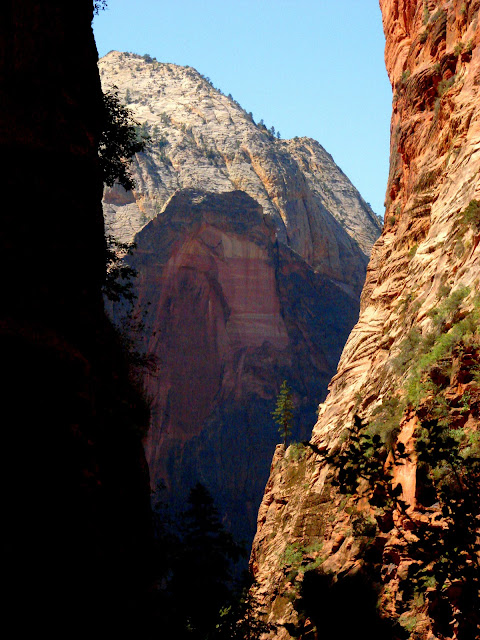
Angels Landing Trail in Zion National Park, Utah
The plateau country is a training ground for geologists and earth scientists, and has been since the days of John Wesley Powell and Joseph Ives, who were the first to lead research parties into the region (they didn't "discover" the plateau, of course; Native Americans have known the region for thousands of years). If you are curious about learning geology in this incredible region, you might consider joining us as a student (of any age) on our geology field studies course Geology 191, offered under the auspices of Modesto Junior College in Modesto, California. The course is designed to fulfil the curiosity of lay geologists and archaeologists, but also to build the skills of geology and archaeologists as well.
Goosenecks of the San Juan River, Utah
Our field course will be a grand loop through the plateau country, with investigations of the Mojave National Scenic Preserve, Grand Canyon, Zion, Bryce Canyon, Arches, Canyonlands, Capitol Reef, Black Canyon of the Gunnison, Mesa Verde and Great Basin National Parks, as well as many monuments, including Bear's Ears, Grand Staircase-Escalante, Natural Bridges, Navajo, Hovenweep, and Colorado National Monuments. It will be an unforgettable two week trip from June 2-17, 2018, beginning and ending in Modesto, California. Information can be found soon at my school website at http://hayesg.faculty.mjc.edu/Geology_191_Colorado_Plateau.html .
Black Canyon of the Gunnison National Park in Colorado
It's not a comfortable trip...we travel in school vans (which of course are known for their luxuriousness!), we camp every night, and the days can be hot, windy, cold, or stormy, and we are out in the middle of anything that happens. But we are staying in beautiful places each night, and there are even showers and laundry available every third day or so! Extensive hiking is not required, but there will be many chances to explore the trails in each park and monument.
Double Arch in Arches National Park in Utah
Geology 191 is a 3 semester unit course which will be taught as a dyad with Anthropology 191 (also 3 units). By end of the course, you will be able to see the landscape the way geologists do: by identifying rocks, minerals and fossils, and interpreting the geological history of an area by working out the sequence of events as exposed in outcrops. If you are a science teacher, you will come home with a collection of photographs that illustrate most of the important principles of geology, and a selection of rocks, minerals and fossils that will make a great classroom teaching tool (legally collected, of course; there are many localities outside of protected parks from which to collect samples). The dual nature of the course means that you will also have a mastery of the archaeology of the plateau region, the home of the Ancestral Puebloans, the Fremont people, the Navajo, the Utes, and others.
Canyonlands National Park, Utah
The cost of the trip will be $850.00 plus the cost of tuition (Currently $46 per unit for California residents, and $222 per unit for out-of-state residents). The cost includes transportation, food, camp fees, and entrance fees. Participants would want to bring a few dollars along for showers, laundry, and souvenirs.  The food is tasty and plentiful (everyone helps cook and clean!), and the school vans...are vans.

For those of you who live in the Modesto region, we are having an organizational meeting on Monday, April 16 in Room 326 of the Science Community Center on the west campus of Modesto Junior College from 6:30-7:30 PM. If you are unable to make it to the meeting, you can contact me for details and handouts.

If you are not in the area, we will be glad to arrange for transportation from nearby airports and train stations (we actually have an Amtrak station in town). Enrollment can be completed online once you are registered with the college (http://www.mjc.edu). Please contact me through the class website if you have any questions.
Bryce Canyon National Park
Hope to see you out there, back of beyond!

Monday, July 31, 2017

But Wait! THIS Summer isn't even over yet! Explore the Colorado Plateau, June 2-17, 2018 (Put it on your calendar now!)

North Rim of Grand Canyon National Park (yes, Gaelyn, we'll be on the North Rim, hope to see you there!)
"Wait!", you are saying, "it's still the summer of 2017! Why are you talking about the summer of 2018?" It's a fair question, and the answer is predicated on an unfortunate truth: our parks are too small and too crowded. If I hope to mount a field studies expedition NEXT summer, I have to start making the reservations right now. That's what I was up to today, and it occurred to me that it's never too early to put something on your calendar. We'd love to have you join us next year, on June 2-17, 2018.

There is no place on this planet like the Colorado Plateau. It's hard to find anyplace else on Earth where the crust remained relatively stable for upwards of a billion years, accumulating several miles of horizontal sediments, only to be lifted up rapidly in the last few million. The Colorado River and her tributaries then stripped away much of the sedimentary cover, and cut deep into the underlying metamorphic rocks, which record a violent geologic history of colliding landmasses and mountain-building. The resulting landscape is one of the most beautiful places imaginable.
Angels Landing Trail in Zion National Park, Utah
The plateau country is a training ground for geologists and earth scientists, and has been since the days of John Wesley Powell and Joseph Ives, who were the first to lead research parties into the region (they didn't "discover" the plateau, of course; Native Americans have known the region for thousands of years). If you are curious about learning geology in this incredible region, you might consider joining us as a student (of any age) on our geology field studies course Geology 191, offered under the auspices of Modesto Junior College in Modesto, California. The course is designed to fulfil the curiosity of lay geologists and archaeologists, but also to build the skills of geology and anthropology majors as well.
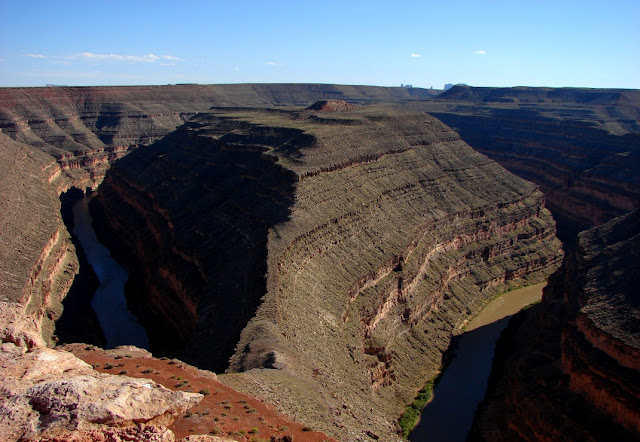
Goosenecks of the San Juan River, Utah
Our field course will be a grand loop through the plateau country, with investigations of the Mojave National Scenic Preserve, Grand Canyon, Zion, Bryce, Arches, Canyonlands, Capitol Reef, Black Canyon of the Gunnison, Mesa Verde and Great Basin National Parks, as well as many monuments, including the new Bear's Ears, Grand Staircase-Escalante, Natural Bridges, Navajo, Hovenweep, Colorado, and state parks like Goblin Valley and Berlin-Ichthyosaur. It will be an unforgettable two week trip from June 2-17, 2018, beginning and ending in Modesto, California. Information can be found soon at my school website at  http://hayesg.faculty.mjc.edu/Geology_174_Colorado_Plateau.html.
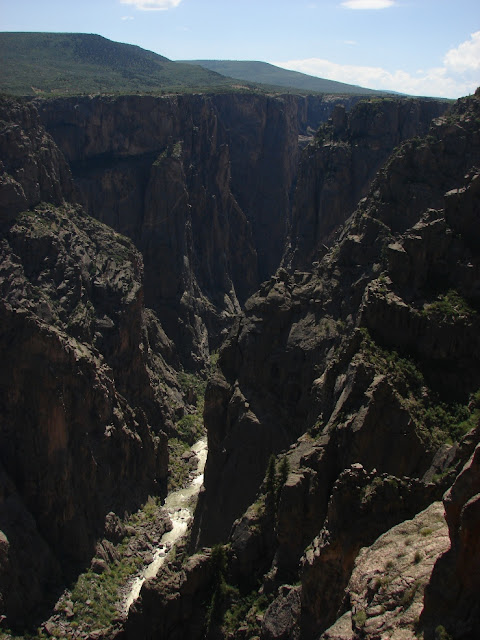
Black Canyon of the Gunnison National Park in Colorado
It's not a comfortable trip...we travel in school vans (which of course are known for their luxuriousness!), we camp every night, and the days can be hot, windy, cold, stormy, and we are out in the middle of anything that happens. But we are staying in beautiful places each night, and there are even showers and laundry available every third day or so! Extensive hiking is not required, but there will be many chances to explore the parks and monuments that we are visiting.
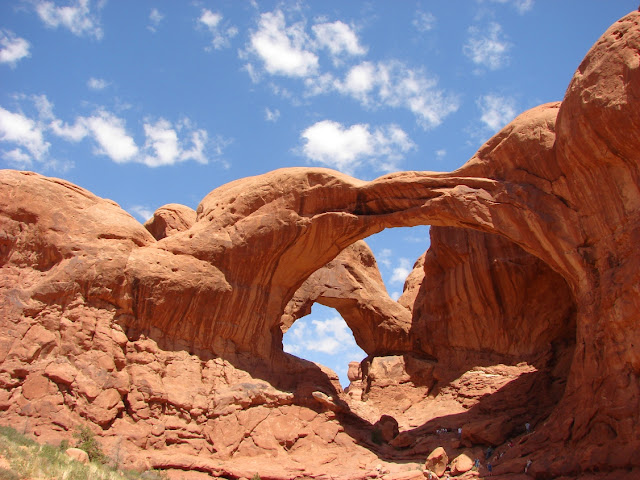
Double Arch in Arches National Park in Utah
Geology 191 is a 3 semester unit course which will be taught as a dyad with Anthropology 191 (also 3 units). By end of the course, you will be able to see the landscape the way geologists do: by identifying rocks, minerals and fossils, and interpreting the geological history of an area by working out the sequence of events as exposed in outcrops. If you are a science teacher, you will come home with a collection of photographs that illustrate most of the important principles of geology, and a selection of rocks, minerals and fossils that will make a great classroom teaching tool (legally collected, of course; there are many localities outside of protected parks from which to collect samples). The dual nature of the course means that you will also have a mastery of the archaeology of the plateau region, the home of the Ancestral Puebloans, the Fremont people, the Navajo, the Utes, and others.
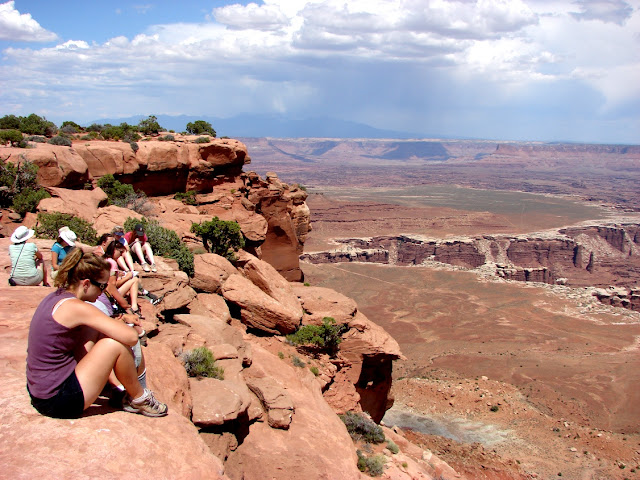
Canyonlands National Park, Utah
The cost of the trip will be about $850.00 plus the cost of tuition (Currently $46 per unit for California residents, and $222 per unit for out-of-state residents). The cost includes transportation, food, camp fees, and entrance fees. Participants would want to bring a few dollars along for showers, laundry, and souvenirs.  The food is tasty and plentiful (everyone helps cook and clean!), and the school vans...are vans.

For those of you who live in the Modesto region, we are having an organizational meeting in April, towards the end of the spring semester.

If you are not in the area, we will be glad to arrange for transportation from nearby airports and train stations (we actually have an Amtrak station in town). Enrollment can be completed online once you are registered with the college (http://www.mjc.edu/index.html). Please contact me through the class website if you have any questions.
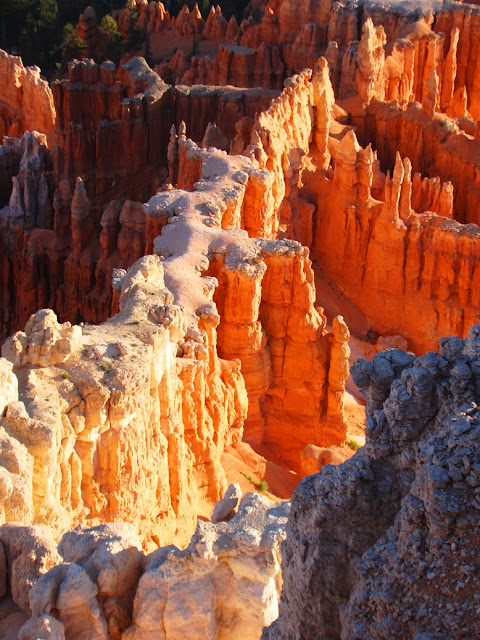
Bryce Canyon National Park
Hope to see you out there, back of beyond!

Wednesday, April 1, 2015

It's One of the Most Spectacular Landscapes on Planet Earth: Come and see the Colorado Plateau in Person! June 11-26, 2015

For once I am not discussing a trip I have taken...I am talking about a trip that you can take.
Grand Canyon from Powell Point on the South Rim
I spend a lot of time on my blog trying to convey the sense of wonder that comes from exploring the wild places of the Earth. I have to say, though, that nothing comes close to the actual experience of being there, seeing the rock, hearing the wind and feeling the heat, watching the night-time skies, and walking within the ruins of villages of people who lived on this land thousands of years ago (and meeting their descendants in the region today).
Mesa Verde National Park in southwestern Colorado
The Colorado Plateau, encompassing parts of Arizona, New Mexico, Colorado and Utah, is one of the grandest geological showplaces on the planet, and at the same time it is an archaeological treasure. Our geology department is combining forces with our anthropology department to offer a unique course on the archaeology and geology of the Colorado Plateau and other spectacular sites in the American West. The courses (Geology 191 or Anthropology 191) will take place on June 11-26, 2015, beginning and ending at Modesto Junior College in Central California. The cost will be about $160 for registration (for California residents; out-of-state tuition is higher), and $850 for food, transportation, and camping and entrance fees. The only additional costs would be for laundry, showers, and souvenirs.
Wupatki National Monument and the San Francisco Peaks volcanic field
Although these two courses are directed towards geology and anthropology majors, our travelers will also include teachers, life-long learning participants, and anyone who is fascinated in the geology of this stunning region. If you are a science teacher, you will come home with a collection of photographs that illustrate most of the important principles of geology, and a selection of rocks, minerals and fossils that will make great classroom teaching tools (legally collected, of course; there are many localities outside of protected parks from which to collect samples).
Kashua-Katuwe National Monument in New Mexico
What will you see?

Six states: California, Nevada, Arizona, New Mexico, Colorado, and Utah.

Eight national parks: Grand Canyon, Petrified Forest, Mesa Verde, Zion, Pecos, Chaco Culture, Great Basin, and Yosemite.

Nine national monuments and preserves: Mojave Desert, Wupatki, Sunset Crater, El Morro, El Malpais, Kashua-Katuwe, Bandelier, Jemez Caldera, Aztec, Natural Bridges, Horseshoe Bend at Glen Canyon Dam, and many more state and tribal parks including the pueblos of New Mexico!
Horseshoe Bend on the Colorado River near Glen Canyon Dam

Sound interesting?

If you are in the Modesto region, we will have an organizational meeting on Monday, April 6, at 7:30 PM at MJC in Science Community Center 326 (West Campus). Previous experience in geology, earth science or archaeology is recommended, but not required. You will need to be healthy enough to camp and deal with rugged terrain, although long hikes are not required (opportunities for hikes will be common, however). If you are not able to attend the meeting, please contact me, or our anthropology professor, Susan Kerr, and we will get in touch with the information that you will need.

The trip itinerary and basic information is on the web at http://hayesg.faculty.mjc.edu/Geology_174_Colorado_Plateau.html (my site for the course), or http://kerrs.faculty.mjc.edu/anthro_191_193.html (my fellow professor Susan Kerr).