It's
not complicated. It's called the Antiquities Act, and the law has but four sections, and no subsections. You can read it in its entirety below. It lays out the process by which the president of the United States can establish a national monument to protect endangered
historic landmarks, historic and prehistoric structures, and other objects of historic or scientific interest that are situated upon the lands owned or controlled by the Government of the United States. The law was passed in 1906 because of the wholesale destruction of archaeological sites taking place across the western United States at that time.
American Antiquities Act of 1906
Be it enacted by the Senate and House of Representatives of the United States of America in Congress assembled, That any person who shall appropriate, excavate, injure, or destroy any historic or prehistoric ruin or monument, or any object of antiquity, situated on lands owned or controlled by the Government of the United States, without the permission of the Secretary of the Department of the Government having jurisdiction over the lands on which said antiquities are situated, shall, upon conviction, be fined in a sum of not more than five hundred dollars or be imprisoned for a period of not more than ninety days, or shall suffer both fine and imprisonment, in the discretion of the court.
Sec. 2. That the President of the United States is hereby authorized, in his discretion, to declare by public proclamation historic landmarks, historic and prehistoric structures, and other objects of historic or scientific interest that are situated upon the lands owned or controlled by the Government of the United States to be national monuments, and may reserve as a part thereof parcels of land, the limits of which in all cases shall be confined to the smallest area compatible with proper care and management of the objects to be protected: Provided, That when such objects are situated upon a tract covered by a bona fide unperfected claim or held in private ownership, the tract, or so much thereof as may be necessary for the proper care and management of the object, may be relinquished to the Government, and the Secretary of the Interior is hereby authorized to accept the relinquishment of such tracts in behalf of the Government of the United States.
Sec. 3. That permits for the examination of ruins, the excavation of archaeological sites, and the gathering of objects of antiquity upon the lands under their respective jurisdictions may be granted by the Secretaries of the Interior, Agriculture, and War to institutions which the may deem properly qualified to conduct such examination, excavation, or gathering, subject to such rules and regulation as they may prescribe: Provided, That the examinations, excavations, and gatherings are undertaken for the benefit of reputable museums, universities, colleges, or other recognized scientific or educational institutions, with a view to increasing the knowledge of such objects, and that the gatherings shall be made for permanent preservation in public museums.
Sec. 4. That the Secretaries of the Departments aforesaid shall make and publish from time to time uniform rules and regulations for the purpose of carrying out the provisions of this Act. Approved, June 8, 1906
It might be hard to believe, but there was a time when certain people thought the Grand Canyon was not worthy of preservation as a national park. There was a time when the protection of Zion Canyon was controversial. It was the same for Olympic National Park. Arches National Park. Death Valley National Park. Joshua Tree National Park. It may be hard to believe, but it took the actions of a president to save these crown jewels of our national park system from destruction by using the Antiquities Act. It sometimes took time for it to dawn on people that these lands were national treasures and worthy of protection. At a more mercenary level, it took time for some people to realize that more money could be made by protecting the land than could be made by consumptive uses like logging or mining. Eventually Congress named these monuments as national parks, and they are the most precious parts of the American landscape.

The history of the Antiquities Act has thus been controversial at times, but in the end, the monuments that have been established by presidents, both Democrat and Republican, have ultimately been recognized as important parts of our national heritage. These lands are the best of what our country has to offer. And that is what makes developments in the last few months so distressing. Our country has been hijacked by robber barons who think only in terms of personal profit from public lands at the expense of our citizens. Ground Zero lies in southern Utah and northern Arizona at Grand Staircase-Escalante National Monument, and Bear's Ears National Monument. We have a president who is illegally trying to undo the declarations of earlier presidents.

Grand Staircase-Escalante National Monument was established by President Bill Clinton in 1996, It was controversial because it was established in part to preclude strip-mining for coal on the Kaiparowits Plateau. The park protects 1.8 million acres of spectacular plateaus and slickrock canyons, and has come to be recognized as one of the most important paleontology parks in the nation. New dinosaur species continue to be discovered within lands protected by the monument. It seems ironic to me that towns and villages adjacent to the park have prospered because of tourism in this park. If they had built the coal mine, the coal itself would be giving out by now, and the towns would be in decline. Instead, as long as there is a monument these towns will do well. Given the issue of rampant overcrowding in nearby Zion National Park, Grand Staircase-Escalante provides a lot of wide-open space and recreational opportunities.

Bear's Ears National Monument is a special place. It had been proposed for decades, as it has the largest concentration of archaeological sites in the Four Corners region. Negotiations had gone on for years, and local tribes were unified in asking protection of the region, as were numerous environmental organizations. Grazing and certain other historical activities were to be allowed to continue. But greed won out and the negotiations faltered. President Barack Obama stepped in and established the monument, which was smaller than the most ambitious proposals, but which still included 1.4 million acres.

Cedar Mesa, the central feature in the southern part of the monument, was a critically important part of the "fertile crescent" that supported Ancestral Pueblo communities for more than a thousand years. Earlier cultures have lived in the region for thousands of years, and archaeological investigations have only scratched the surface of the stories to be told here. This land is sacred to the Native Americans who live in the region today, and many of their cultural activities take place in the monument.

Unfortunately, many of the present-day inhabitants of the region have no appreciation or respect for the cultural value of this region other than the price that they can get on the black market for pottery, fabrics, and other artifacts that they are stealing on an ongoing basis throughout the monument. The rangers of the Bureau of Land Management and Forest Service have been threatened with violence for doing their job of protecting these lands, and they are overextended. Trump and his Interior Secretary Zinke don't care that this is going on. They are now working to undo the work of decades of negotiation and compromise, and are trying
to open these lands to even more exploitation and damage with their efforts this week. Most residents of Utah are in support of the monument, but they are being ignored by their own government.
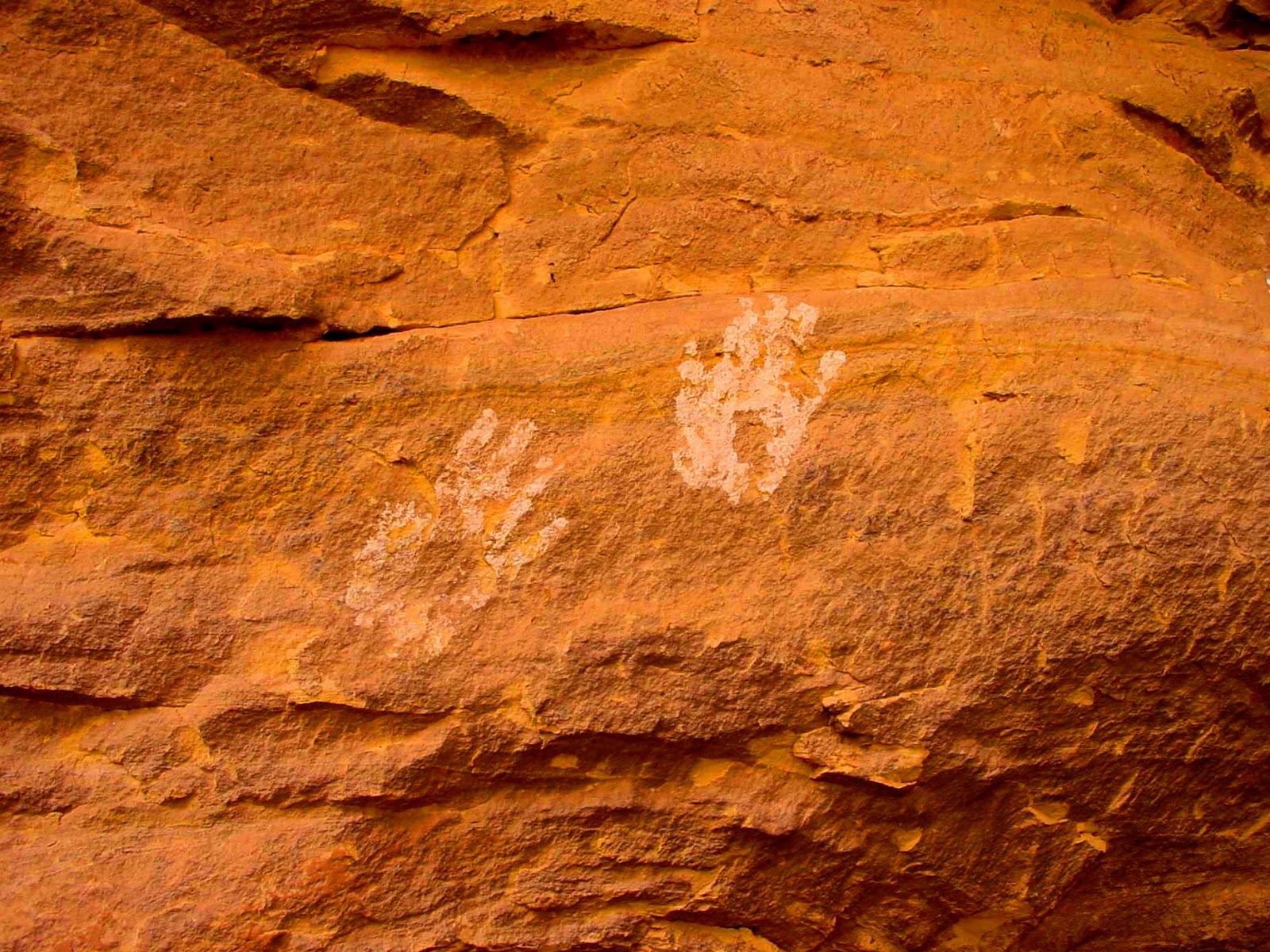
I have a personal connection to the Bear's Ears. I have been bringing students into this region for thirty years, guiding them to understand the geology, archaeology, and natural history of this incredible region. All of these pictures were taken on these trips. Besides the cultural and archaeological value of this region, it is also a land of incredible vistas and spectacular scenery. With parks like Arches, Zion and Grand Canyon bursting at the seams with visitors, we need more protected lands, not less.

The president's actions are clearly illegal, and I hope that anyone who loves this country will oppose him in this terrible venture. I cannot accept that this land will be given back to the pothunters and grave robbers. The local people who argue that these lands should be given over to the state because they and their ancestors have lived there for a whole century rarely note the irony of their attitude. The local people whose ancestors lived here for thousands of years want this land protected.

Even more, I hope that more people from other parts of the world will visit, explore, and make their own personal discoveries. People who love a land will fight to protect it from exploitation. If these issues concern you, please consider contacting your own representatives in Congress, and if they don't listen to you, consider working hard to replace them in coming elections. Government officials in Utah should also be hearing from us. They need to know that losing tourism dollars may hurt more than any short-term profits to be gained by destroying the monuments.
Yes, I'm angrier than usual tonight. These lands that I love more than almost any other are under attack, and I fear that greed and money will win out over what is right and good. Trump and Zinke are proving the wisdom of the Antiquities Act, as they the exploiters the act was meant to stop.